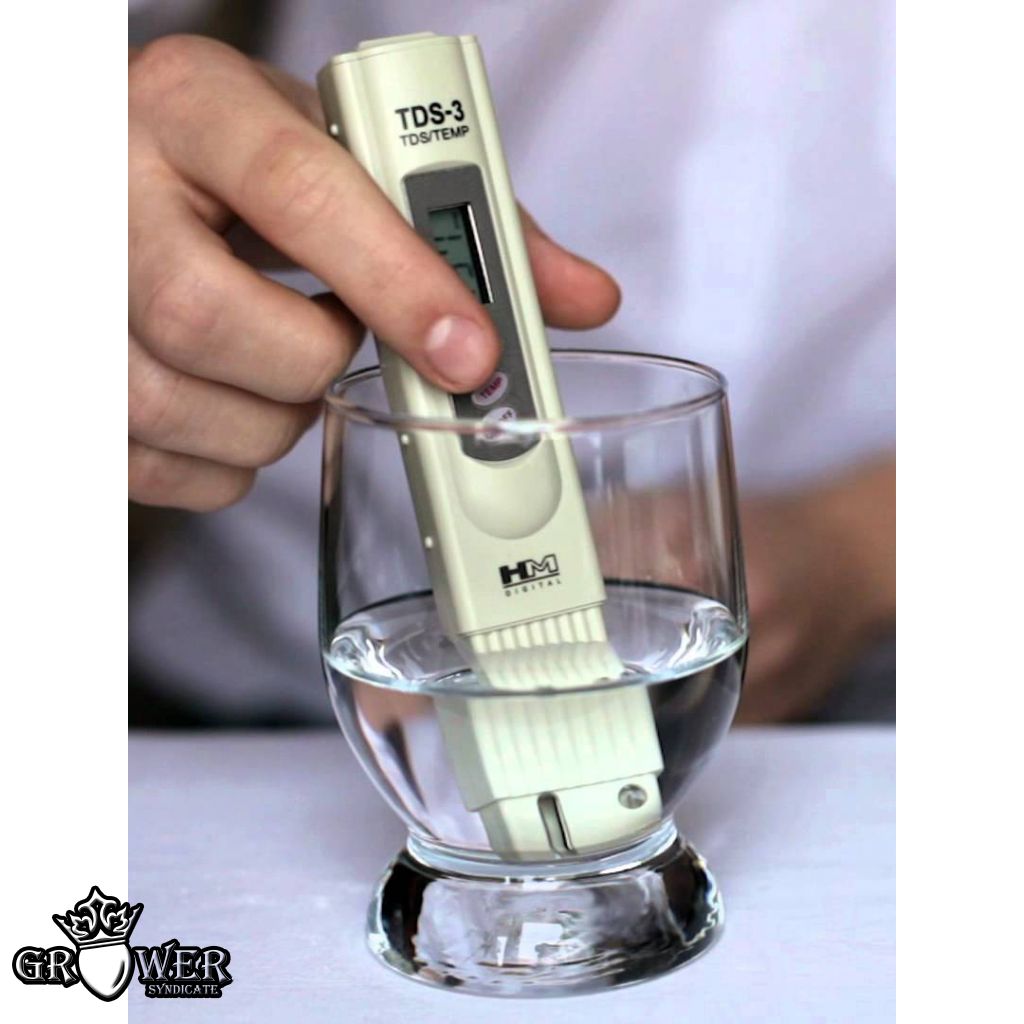
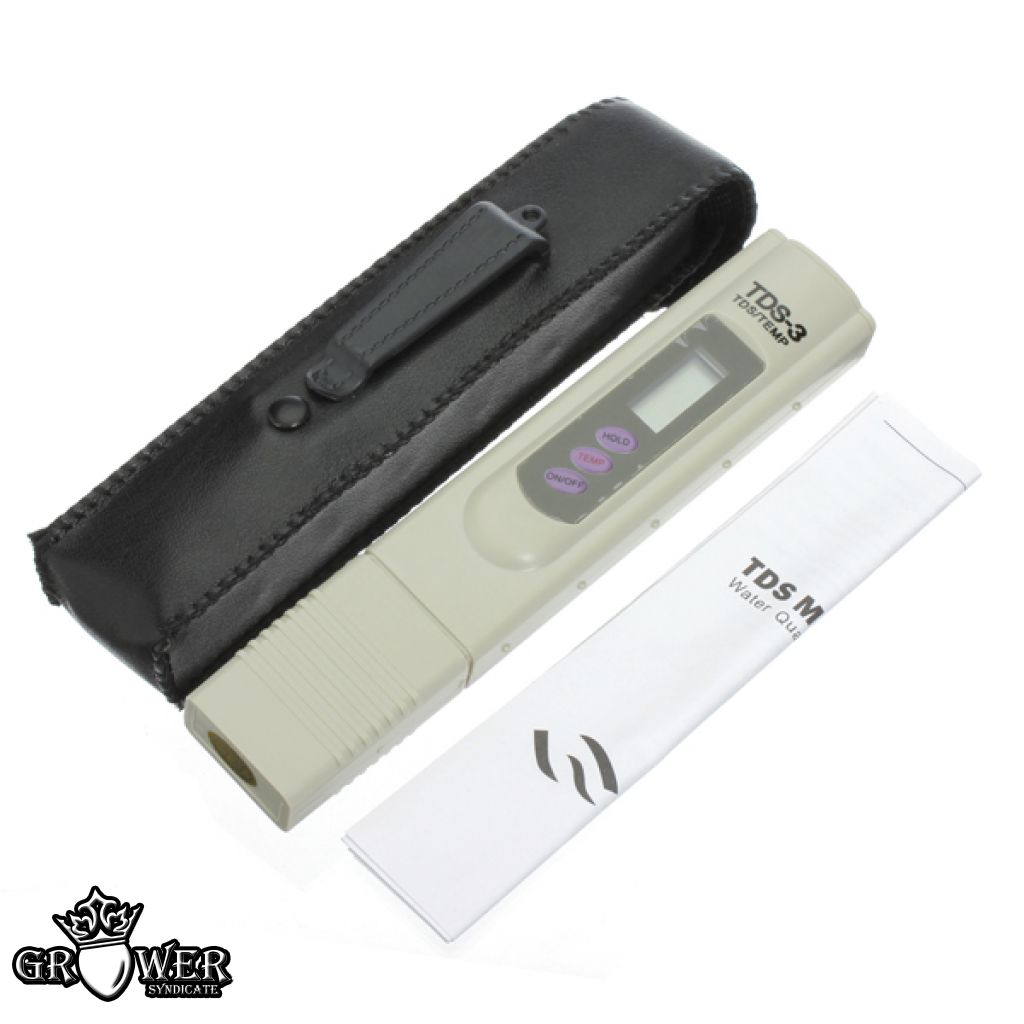
Salinometer, TDS Meter 3 ( original)
Application area:
- Measures salt levels in hydroponic systems, tap water, boreholes, wells, aquariums and pools. Built-in thermometer.
- Evaluation of total hardness (dH, f, mmol/liter, mg-eq/l), checking the efficiency of household purification systems operating on the principle of reverse osmosis (RO)
- checking the efficiency of household filters (Barrier, Brita, etc.)
The operating principle of TDS-3 is based on the direct dependence of the solution's electrical conductivity (current strength in a constant electric field created by the device's electrodes) on the amount of compounds dissolved in water ( parts per million, ppm; 1 ppm=1 mg/l ).
Peculiarities:
- The lightest and smallest device on the market, very easy to use.
- Advanced microprocessor measurement technology
- Hold function: save the measurement results for easy reading and recording
- Auto power-off function: if the device is not used, it turns off automatically after 10 minutes
- Convenient numbers on the LCD display
- The device is factory calibrated using a 342ppm NaCl solution. Recalibration is possible using a watchmaker's screwdriver and a calibration screw located in a hole in the device body.
Specifications:
- Mineralization (salinity) measurement range: 0 - 9990 parts per million (mg/l). The x10 indicator on the display means that the measurement readings should be multiplied by 10
- Estimation of total water hardness by converting mineralization into a hardness unit: 1 dH = 17.8 ppm, 1 f = 10 ppm, 1 mg-eq/l = 50.05 ppm CaCO3
- Temperature measurement range: 0-80C
- Division value: 1 part per million for TDS
- Error: ±2%
- Built-in sensor for automatic temperature compensation: from 1 to 50C
- Power supply: 2x1.5 batteries included
- Battery life: 1000+ hours of continuous use
- Dimensions: 14x2.3x1.5 cm.
- Weight: 34 g.
The following factors affect the TDS meter readings:
- Changes in temperature can increase or decrease electrical conductivity.
- Air bubble on the electrode.
- Static charge from fingers, clothing, etc.
- Material properties: plastic tableware retains an electrical charge longer than glass.
- Water quantity: at different volumes and depths, water can have different levels of electrical conductivity
How to improve TDS meter readings?
- Stir the water before immersing the appliance in it.
- After immersion, lightly touch the device to the wall of the vessel to remove static electricity and stir the water with it to remove air bubbles on the electrode.
- The electrode should be placed as close as possible to the center of the vessel containing the measured solution or water.
- The longer the device is in the water, the more accurate the readings will be displayed on the display.
- The ideal temperature for taking measurements is 25 degrees Celsius.
- Always rinse the electrode with distilled water.
Отзывы о Salinometer TDS Meter 3
Related Products
1
reviews
0
answers
100%
1 positive

Usefulness of review


Нека
Guest
04 June 2017 00:00:00
Незаменимая штука в нашем деле, все как в описании, работает как часики, доставили быстро,магазин теперь в закладках, удачи
Yes /
No
Review useful?
0
Reply
Leave a review